About us

The School of Music – a connected place.
School of Music staff contribute to the life of music and culture in the ACT and the nation through regular music industry engagements in performance, composition, teaching, producing, advising, listening, serving on panels and supporting the sector, as well as through regular community consultation engagements.
Recent examples include:
- The Canberra Symphony Orchestra (CSO)
- The Canberra Symphony Orchestra Australian Chamber Series
- ArtsACT
- The Australian Music Centre
- Ensemble Offspring
- The Flinders String Quartet
- The Sydney Opera House Utzon Room Chamber Series
- Addi Sounds Community Recording Studio, Addi Road, Marrickville
- Ngarra Burria First Peoples Composers Program
- The RAAF Band
- NATSIMO
- APRA
- ANAM
- Music for Canberra
- Soundboard (Support Group)
- The Roundtable (Support Group)
- The Friends of the School of Music (Support and Funding Group)
- Musica Viva
- Llewellyn Choir
- Canberra Qwire
- The ANU Chinese Ensemble
- ANU Orchestra
- Ellery String Quartet
- SCUNA
- The Canberra International Music Festival (CIMF)
- The National Folk Festival (NFF)
- Creative Australia
- The Sydney Symphony Orchestra (SSO)
- Balmain Sinfonia (Sydney’s leading pro-am orchestra)
- Steel City Strings, Wollongong (a solid commissioner of string orchestra music in Australia)
- Melbourne String Ensemble (MSE) also a solid commissioner of string orchestra music in Australia
- The Amateur Chamber Music Society Canberra
- The Wesley Music Centre Canberra
- The Canberra Choral Society
- Kompactus Choir
- The Melbourne Symphony Orchestra (MSO)
- Radford High School
- The Kingsland Program
As well, we regularly meet with individuals who have interest in the life of the School. Consultation is a regular part of our weekly work.
We are enjoying our leading role in sector building, and we continue to remain adaptable and serve the sector in 2026 and beyond. We thrive within our engagements and collaborations, and we are thrilled that in 2026 we have attracted the finest sessional staff from around the country to teach into the new and the old programs that we offer at the School.
Together we sustain much of the old whilst also embracing much of the new, remaining relevant to 21st-century music developments.
Ours is a spirit of passion for music and culture, love of creative engagement and collaboration, willingness in service, and joy and lightness of mind through it all. This is the stuff of us.
Students
The ANU School of Music is uniquely positioned within Australia’s National University to contribute to shaping the future of music practice. The School is committed to ensuring that all of its students develop both creatively and technically, and we value the universalising environment that the wider university experience offers students.
Some 55% of students study a double degree – music plus one other discipline. Studying at the ANU enables such double degree options.
Graduates of the last 10 years have moved on to higher degree study within the School, to other major Conservatoriums and also to ANAM. Others have moved directly into industry as performers, with six on stage at a recent Canberra Symphony Orchestra concert, as composers, as teachers, as recording engineers/producers, and some have moved into employment at national institutions such as the NFSA and the CIMF.
Collaboration is at the centre of what our students do. Students enjoy our unique connections as a Music School in Canberra with many national institutions such as the Canberra International Music Festival, where students are frequently engaged as performers and production interns; the National Folk Festival, where student groups perform; and the National Film and Sound Archive, where screen composition students have frequently composed music to historical Australian black and white silent films for screening. They have performed at Government House and Embassies, worked on projects with students of the School of Art and Design, worked at many clubs and venues in our thriving city, and the list goes on. Students also enjoy collaborations with orchestras in Canberra, Sydney and Melbourne.
Research
The research activities of the School of Music align with, respond to and contribute to contemporary disciplinary shifts, technological innovations, cultural developments and re-invigorated traditions, which generates new understanding of the role of music in today’s world. The School has three defined research clusters centred around Contemporary Music, First Nations Music, and Music and Well-being.
The School identifies contemporary music as multi-styled, including classical, jazz, popular and expanding forms, and practised within both industry and community contexts, with collaboration at its core as it intersects with various cultures, media forms and disciplines.
Study
Aligned with its research strengths, the School offers innovative Bachelors programs with a choice of two undergraduate majors: Contemporary Music Production, focusing on recording and composition; and Music Practice, focusing on performance, composition, or a hybrid of the two.
There are nine to ten performance courses students can take during a three-year degree. Titles may include Fit to Perform, Studio Performance, Professional and Community Music Leadership, Music Practice, and others. Most of these include seminars, ensemble practice and the 1:1 tuition option, totalling between three to five hours per week of face-to-face performance learning, depending on the course.
Students learn with some of the best performance staff in the country, including members of leading Australian jazz groups, leading Australian choral directors, fine players from the Canberra Symphony Orchestra, musicians from other cultural traditions including Balinese, African and Indigenous Australian traditions, and soloists who have worked with some of the world’s most renowned composers. In addition, students are encouraged to participate in other ensembles as available.
Our Masters and Doctoral programs see many candidates from rich music cultures from around the world enrol, including those from African music traditions, Asian traditions, Iranian traditions, First Nations traditions and more. Amongst Australian universities, it is a culturally dynamic place.
Facilities
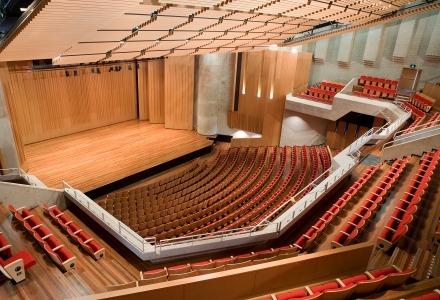
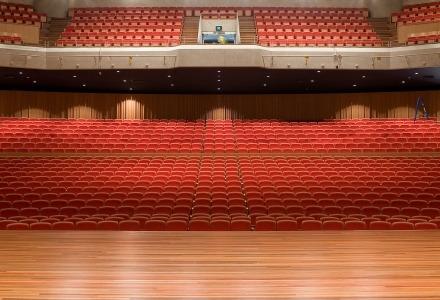
The School’s programs are supported by well-used performance venues, including Llewellyn Hall, Sitsky Room recital space, percussion performance space and the Big Band Room, as well as a recording studio, mixing suites, keyboards and film composition lab, lecture rooms, rare keyboard instruments collections rooms, the School café, and the spaces of the wider University.
These facilities also support the School’s key strategic partnerships with major cultural events and organisations such as the Canberra International Music Festival, the National Folk Festival and the Canberra Symphony Orchestra.
First Nations
The School also prides itself on its ground-breaking work with First Nations musicians through the internationally awarded Ngarra Burria First Peoples Composers Program, the Yil Lull Studio, and the Space to Create Program, all of which actively support ANU’s mission to transform Australian society with impactful, collaborative, Indigenous-led research, policy development and action.
Recent Staff Events
Notable work engagements involving some of our staff in the past month, since March 2026, include:
Dr Kristin McGee has taken an active role in the Canberra music scene leading Smith's Tuesday night jazz sessions, having hosted several events in recent months with professional and community musicians based in the Capital.
Professor Ken Lampl is film composer for Monument, which had its premiere screening in Times Square, New York City, in March 2026.
Composer and sessional staff member Dr Jodie Blackshaw received the premiere of her commissioned work Eyes Turned Skyward for symphonic wind orchestra, commissioned and staged through the College Band Directors National Association USA.
Guitarist and composer Dr Gregory Stott has been accepted to present at the upcoming multi-institutional Guitar in Popular Music Conference London.
Sessional staff member Dr Eugene Ughetti is again director for the Canberra International Music Festival 2026 and is key to linking the School with the Festival.
Contemporary music expert Dr Pat O'Grady was appointed Secretary for the international Society of Music Production Research.
Ensembles convenor Dr Anna McDonald is just back from playing a short recital with the Jazmourian Ensemble at the Sydney Conservatorium of Music for the launch of the Bloomsbury Press publication Harmony of the Spheres: Ancient and Recent Perspectives (2026).
APRA National Luminary and Head of School Professor Christopher Sainsbury was listed amongst the ANAM 30 Stories collection, and also recorded a new brass quintet with Lyrebird Brass, a faculty group from Melbourne Conservatorium.
Associate Professor Bonnie McConnell has a new publication with the international CHIME research team, Community Health Intervention through Musical Engagement in South Africa, a formative study exploring the feasibility of developing a culturally grounded, music-based intervention to support perinatal mental health, published through the Public Library of Science.
Sessional staff member Matt Barnes is currently the Sound Design expert for the Canberra International Music Festival.
As reported in the ANU Reporter, Dr Jos Mulder and an international interdisciplinary team have recently launched HELA, Healthy Ears, Limited Annoyance, an initiative providing low-cost, online certifications to help those working in the live music industry implement safe listening practices aligned with World Health Organisation standards.
Sessional staff member and technical officer Sophie Edwards received an industry nomination for the Australian Music Producer and Engineer's Guild Award Breakthrough Producer of the Year in March.
Highlight
To highlight one example from the above in more detail:
Professor Kenneth Lampl composed the score for Monument, directed by Bryan Singer, whose credits include The Usual Suspects, X-Men and Bohemian Rhapsody. The film premiered on Wednesday 18 March at the AMC Theatre in Times Square, New York, and is currently playing in theatres across the United States.
The opening credits feature a collaboration with Radiohead — an orchestral reimagining of Everything in Its Right Place. Lampl’s score has been widely praised, with Film Threat noting: “The score by Kenneth Lampl needs to be mentioned. The music throughout is genuinely great. It never oversells the emotions but does underscore the main emotion in each scene. The film is good, but the music pushes the whole production to greatness.”
See The Monument trailer.
Piano student Tyler Nguyen (left) with piano lecturer Dr Edward Neeman (right). Image: Studio@ANU
Join our vibrant community of leading performers, composers, and musicologists at ANU School of Music. Preparing artists for musical careers in the 21st century.

Subscribe
Receive our latest news and invitations to events and exhibitions.